- Give each important topic its own page, linked from the menu.
- Practice-area, city, attorney and contact pages are the core.
- Case results and testimonials need extra care under California’s Rule 7.1.
Why a page beats a line on the homepage
A sentence on your homepage that says “We also handle wrongful death” does very little. Google finds pages mainly by following links, and its link guide says “every page you care about should have a link from at least one other page on your site.” Google also says it can use the number of internal links to a page as a hint of how important that page is. A page in your main menu is linked from every page on the site.
It matters for people too. Someone who was just hurt or arrested wants to see that you handle their exact problem, not scroll a long homepage looking for it.
Do this: give each topic below its own page with its own address, and put the main ones in your menu.
The six core pages
- 1. Practice-area pages. One page per case type: car accidents, DUI, wrongful termination, and so on. In our experience this is where most search visits land. We explain how to write them in practice-area pages that bring cases. Every firm needs these.
- 2. Areas served and city pages. Show where you take cases. One areas-served page is enough for many firms. Add a city page only where you have real local ties, like an office or the courthouse your cases go to. See our guide to city pages.
- 3. Attorney and team pages. People hire people. Give each attorney a page with bar admission, education, the cases they handle and a real photo. Google’s helpful content guide asks whether it is clear who created the content. Attorney pages answer that.
- 4. Contact page. Phone, address, hours, a map and a short form. Also keep the phone number one tap away on every page. California’s Rule 7.2 says advertising must include the name and address of at least one lawyer or firm responsible for it.
- 5. About page. Why the firm exists, how you work with clients, the languages you speak, your bar and community ties. Short and true beats long and grand.
- 6. Blog. Answers to the questions clients ask on the phone. A few useful posts a month beat a daily post nobody needs.
Pages that answer questions before the call
Google asks whether a reader will “leave feeling they’ve learned enough about a topic” to reach their goal. These pages do that job.
- 7. FAQ page. Short, direct answers: Do I have a case? What will it cost? How long will it take? Put the best answers on the matching practice-area page too. Useful for every firm.
- 8. Laws explained pages. Plain-English pages on the laws behind your cases, like California’s lemon law or a tenant’s right to repairs. Have an attorney check them and link each one to the matching practice-area page. Strongest for lemon law, employment, tenant and immigration firms.
- 9. Fees page. For injury, employment and lemon law firms, explain how contingency fees work: what the percentage means, who pays case costs, what happens if there is no recovery. Rule 7.1’s comments say “no fee without recovery” is misleading unless it also says whether the client pays costs. California also requires contingency fee contracts to state that the fee “is not set by law but is negotiable.”
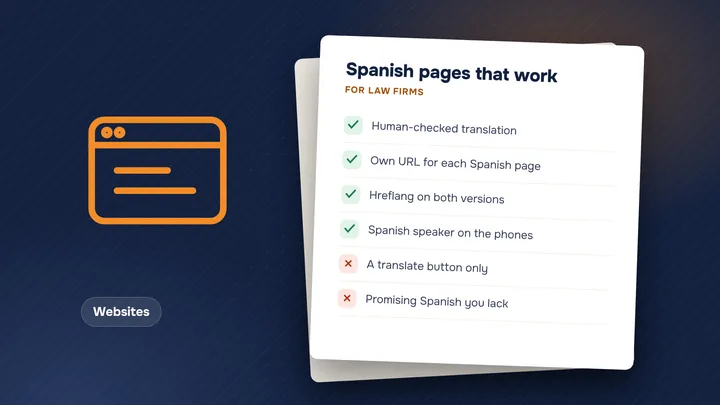
- 10. Spanish pages. If many of your clients speak Spanish, give them real Spanish pages written or checked by a fluent speaker, and a Spanish-speaking person to call. A translate button is not the same thing.
Pages that build trust, within the rules
- 11. Reviews and testimonials page. Collect real client reviews on one page and link to where they live, like your Google profile. California’s Rule 7.1 comments say a truthful testimonial can still mislead if it creates an “unjustified expectation,” and that a disclaimer “often avoids” this. Never write or edit reviews for clients.
- 12. Case results page. Worth having only where results matter to the reader: injury, criminal defense, employment, lemon law and tenant cases. Show real results with context, such as the type of case and what happened. Add a clear note that every case is different and past results don’t promise future ones. Don’t present one unusual result as typical. Family law and immigration firms often do better with clear process pages than with numbers.
Do this: have an attorney check both pages against our California advertising rules checklist, and ask an ethics counsel when you are unsure.
Two bonus pages
- Glossary. Short definitions of words clients hear but don’t know: deposition, demand letter, arraignment, statute of limitations. Link each term to the page where it matters.
- News. New laws that affect your clients, new attorneys, community events. Keep it current. A news page whose last post is years old makes the whole site look abandoned.
Neither is required. Add them once the 12 main pages are in good shape.
How to check your own site
Open your site on your phone and look at the menu. Can you reach your practice areas, attorneys, fees and contact page in one or two taps? Is each practice area its own page, or just a paragraph on a long list?
Our free website check looks for these sections for you, and also tests speed and basic SEO. It takes about 30 seconds.
Do this: start with the gaps that cost you cases, like a missing practice-area page, no attorney pages or no fees page. Then add the rest one at a time. A real, useful page always beats a page added just to tick a box.
Want help with this? See Law firm websites.
Sources
- Google Search Central: Link best practices for Google
- Google Search Central: Help Google understand your site structure
- Google Search Central: Creating helpful, reliable, people-first content
- State Bar of California: Rules of Professional Conduct, Chapter 7 (Rules 7.1–7.5)
- California Business and Professions Code § 6147: Contingency fee contracts
Is your website missing pages?
Check your website free in 30 seconds and get a plain list of what to fix.

Sevag is the founder of araRank and a web developer with 6 years in law firm marketing and SEO. He builds every site we make, from Los Angeles.
About Sevag →